OECD
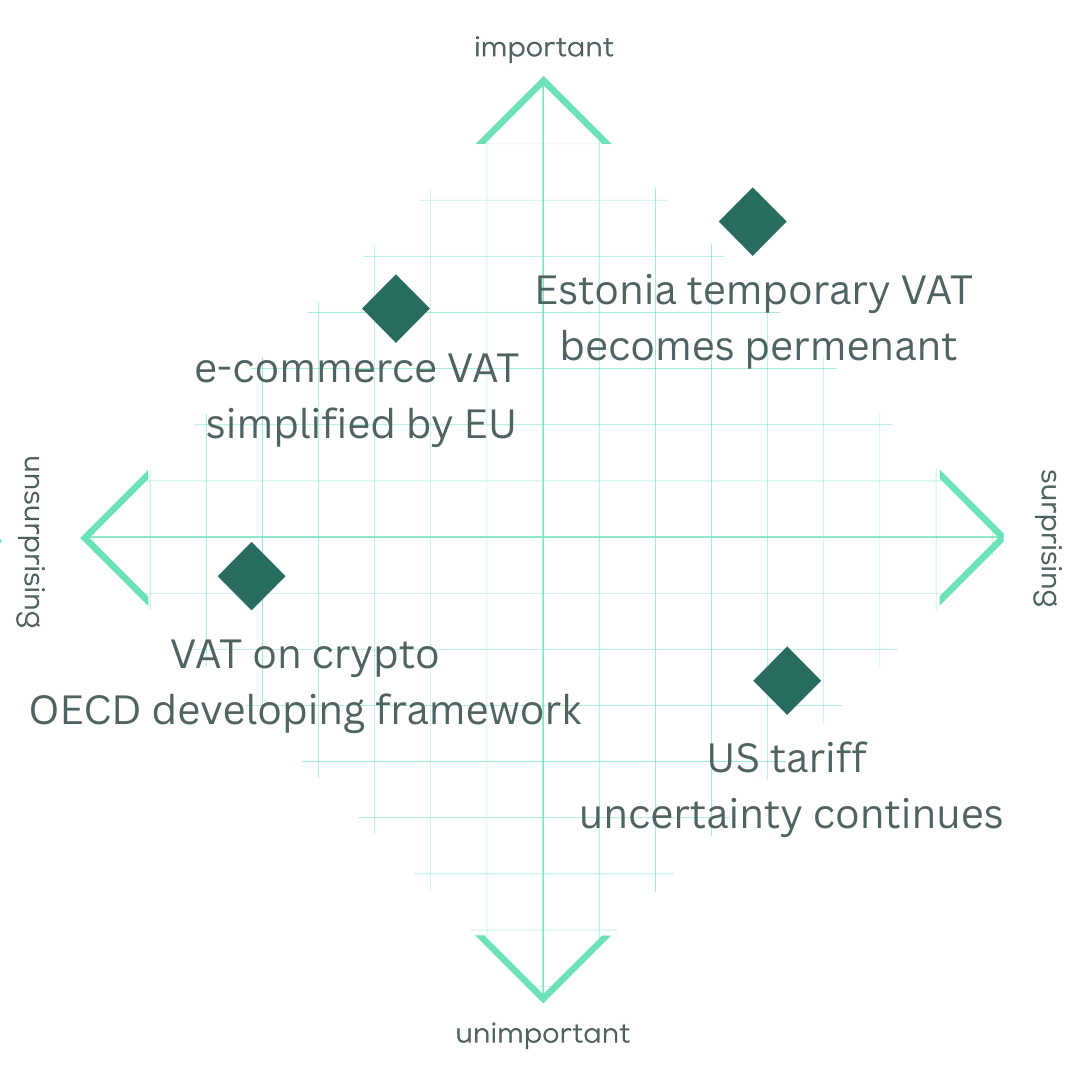
The OECD is developing a framework to help countries implement VAT on crypto assets.
This initiative, led by the OECD’s Working Party on Consumption Taxes, will assess how various crypto assets and related services should be treated under VAT rules.
EU
EU finance ministers have agreed on a new approach to VAT for e-commerce imports to simplify trade and boost compliance. Under the new rules, the responsibility for paying import VAT will shift from the customer to the seller or online marketplace. This will come into effect from 1st July 2028. The changes aim to enhance the Import One-Stop Shop (IOSS), making VAT declaration and payment easier for goods up to €150. While IOSS remains voluntary, non-participation may lead to complex VAT obligations across EU countries. The new rules streamline import VAT collection and support broader customs reforms, creating a more efficient system for cross-border online sales.
Croatia
Croatia mandates real-time e-invoicing for VAT-registered firms from Jan 2026, with a testing phase starting Sept 2025.
Estonia
Estonia’s temporary VAT hike (22% → 24%) becomes permanent from July 2025, with reduced rates also rising.
Finland
Finland proposes lowering its reduced VAT rate from 14% to 13.5% (food, transport, etc.) from 2026 to aid households and growth.
France
France now treats company cars (salary-exchanged) as VAT-taxable services, requiring policy reviews for cross-border compliance.
Germany
The German government has confirmed the reinstatement of the 7% reduced VAT rate for food sales by hospitality businesses, from 1 January 2026.
Italy
Italy plans to permanently cut VAT on art, antiques, and collectibles, aligning with EU rates to boost sales and support the art sector.
Lithuania
Lithuania will raise its reduced VAT rate from 9% to 12% on hotels, transport, and cultural events from Jan 2026, keeping other rates unchanged.
Mozambique
Mozambique reinstates VAT exemptions on soap, sugar, and cooking oil (including raw materials) until Dec 2025 to curb costs.
Philippines
The Philippines imposes 12% VAT on non-resident digital services (B2C) from June 2025, with B2B taxed via withholding.
Poland
Government adopts VAT law amendments to implement national e-invoicing system (KSeF) from Feb 2026.
Romania
Romania will scrap most preferential VAT rates from Aug 2025, retaining only food and medicines at reduced rates.
Tanzania
Tanzania’s 2025–26 VAT reforms include new exemptions (reinsurance), expanded taxation (e-commerce), and a 16% rate on B2C digital sales.
USA – Maryland
Maryland will introduce a 3% sales tax on digital services (e.g., SaaS, cloud hosting) from July 2025, with exemptions for pre-July contracts.
Vietnam
Vietnam extends its 8% VAT cut (from 10%) for fuel, IT, tourism, and other sectors until 2026, excluding finance and real estate.